
TFA HISTORY
Tulsa Foundation for Architecture was created in the 1990s to change the way Tulsa sees itself and treats its built environment.
It was at a time when downtown Tulsa was being abandoned, historic buildings leveled for parking, street improvements failed the pedestrian, zoning codes favored the automobile and there was a lack of overall vision.
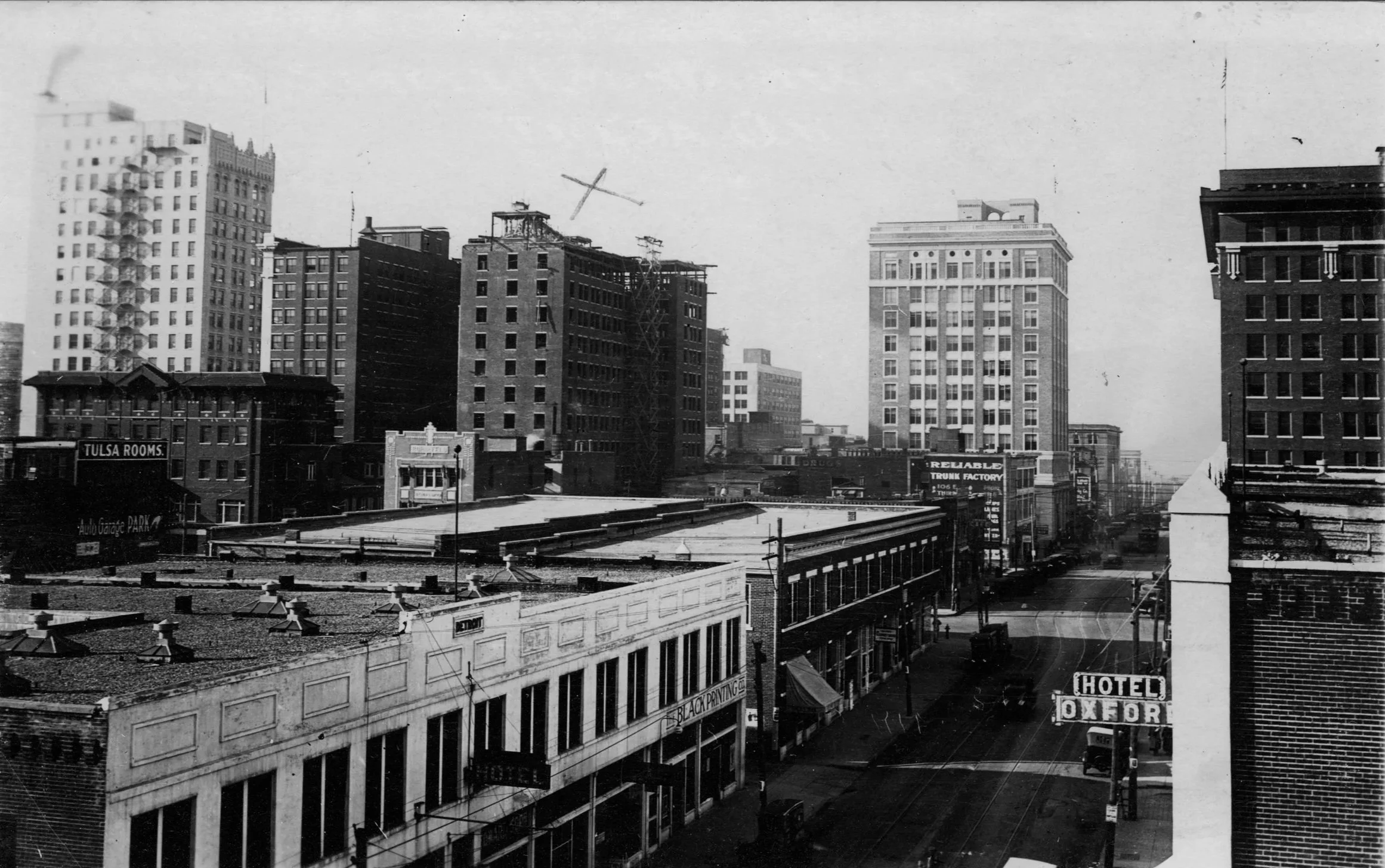
Tulsa’s success with the federal Urban Renewal program in the second half of the 20th century far outpaced many of its competitors. Tulsa forever altered the architectural landscape of downtown, as wide swaths of smaller-scale buildings dating to the turn of the 20th century fell to the wrecking ball to make way for new development. In Tulsa’s case, Urban Renewal left a legacy of significant midcentury structures in its wake, such as the Yamasaki-designed Williams Tower – so whether one considers Urban Renewal a raging success or a disaster is a matter of perspective.
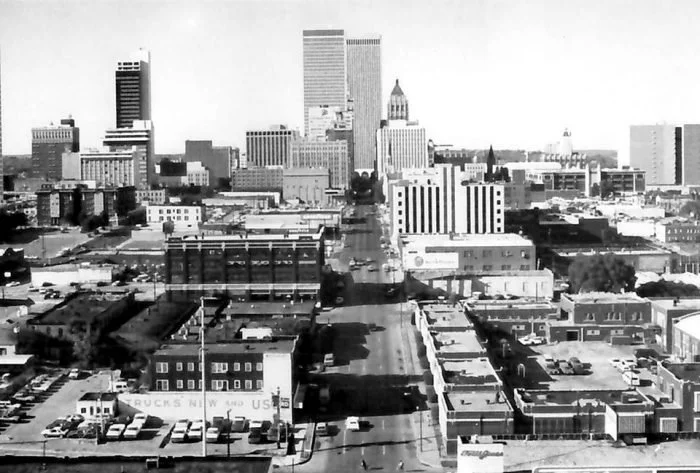
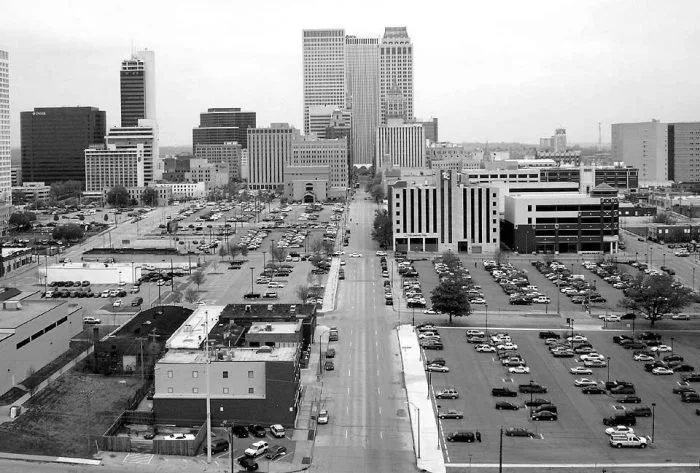
Urban Renewal was designed to bring people back downtown in an era of rapid suburbanization. Shoppers abandoned the city center for the mall, and new highways cut downtowns off from residential neighborhoods. This period also gave rise to a rash of demolitions by downtown property owners for surface parking lots. Highways rammed through close-in historic neighborhoods. By the late 1980s, much of Tulsa’s beautiful urban fabric had become a sea of asphalt. Something had to change.
In 1995, a group of architects and preservationists formed a new nonprofit to provide a credible voice and expertise in the area of historic preservation. Tulsa Foundation for Architecture was born out of AIA Eastern Oklahoma, the local chapter of the American Institute of Architects. AIA needed a repository for collections of original architectural drawings. The community needed a nonprofit organization to provide expertise and leadership in historic preservation, urban design and to educate the community about Tulsa’s diverse architecture.
Elaine Bergman, who was then director of AIA Eastern Oklahoma, brought together local architects Ted Reeds, Lanny McIntosh, Herb Fritz, and Leisa Marshall McNulty along with engineer Tom Wallace and realtor Marty Newman. This group of dedicated stewards of our built environment founded Tulsa Foundation for Architecture (TFA). Elaine Bergman ultimately became TFA’s first executive director and instituted many programs.
Our first ambitious effort was to deliver city design conferences that were patterned after the “Mayors Institute on City Design” (MICD). In partnership with Tulsa’s Mayor, an MICD alumni, AIA Eastern Oklahoma and Tulsa Foundation for Architecture created dynamic day-long events in order to bring our Mayor’s national experience home. In the following years we observed transformative change from the almost two thousand attendees. Participants included city managers, city planners, key staffers representing streets and parks, architects, realtors, real estate owners, neighborhood representatives, educators and the press. These events, held over a period of several years, proved to be highly influential and led to a new vision in our community – a vision where design matters.
Today, TFA continues to build on its original mission to serve as a resource that recognizes, records and preserves the built environment, and advocates quality future development that enhances Tulsa’s livability. Creating a culture that embraces the value of our architectural history is central to TFA’s purpose. Please sign up for our email list to stay in the know about our events and tours.
TFA believes that architecture is not only one of the fine arts, but that it is the most complex and vital art form to mankind. Our buildings are cultural mirrors; they reflect the technology, social trends, economic history, value systems and aesthetic movements of the time of their creation in a manner that other art forms rarely evoke. To preserve historic buildings from every period is a way of traveling back in time, allowing us a glimpse into the mind of people who lived hundreds of years ago. We can learn tremendous amounts about other art forms, technology and ways of life by looking at the smallest of details: nails, bricks, locks, hinges, lighting and plumbing fixtures and on and on. And, like the other great art forms, the best buildings display exemplary craftsmanship. One of TFA’s greatest passions is to share the history and artistic progression of Tulsa’s diverse architecture with our community through tours and other programming.
TFA also owns an extensive collection of original architectural drawings of many significant Tulsa buildings and residences, such as the Medical Arts Building, Warehouse Market, Southern Hills Country Club, the Tulsa Assembly Center, The Mabee Residence, and the Otis McClintock Residence. TFA’s Archives also hold architectural periodicals (Pencil Points, Progressive Architecture, Architectural Forum, and Architectural Record) dating from 1920 to 1980, newspaper clippings, a technical library, photographs, project specifications and artifacts. No other institution in Tulsa gathers this material.
Photo Credit: Boston Ave 1978- Beryl Ford Collection. Boston Ave 2005- Ed Sharrer.